

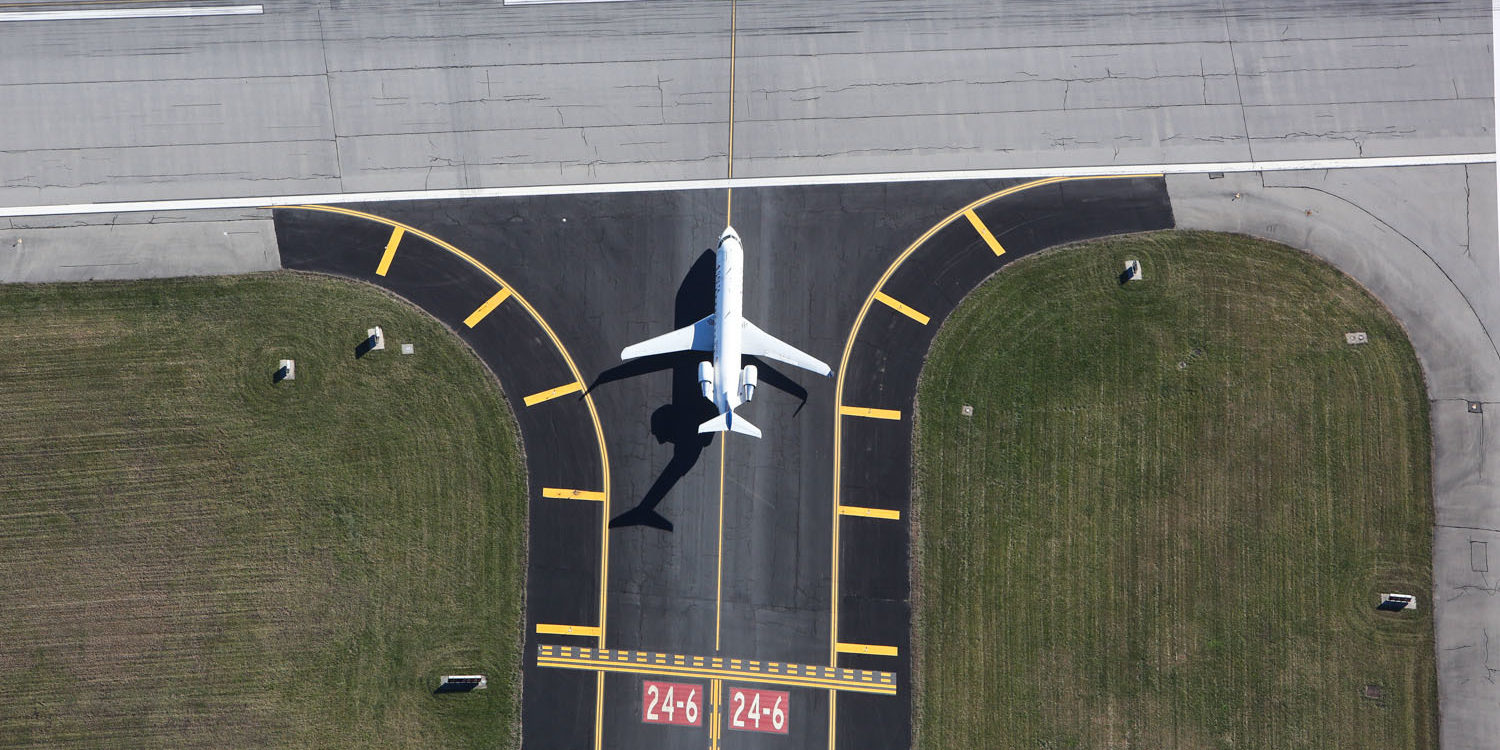
Runway 8-26 Rehabilitation
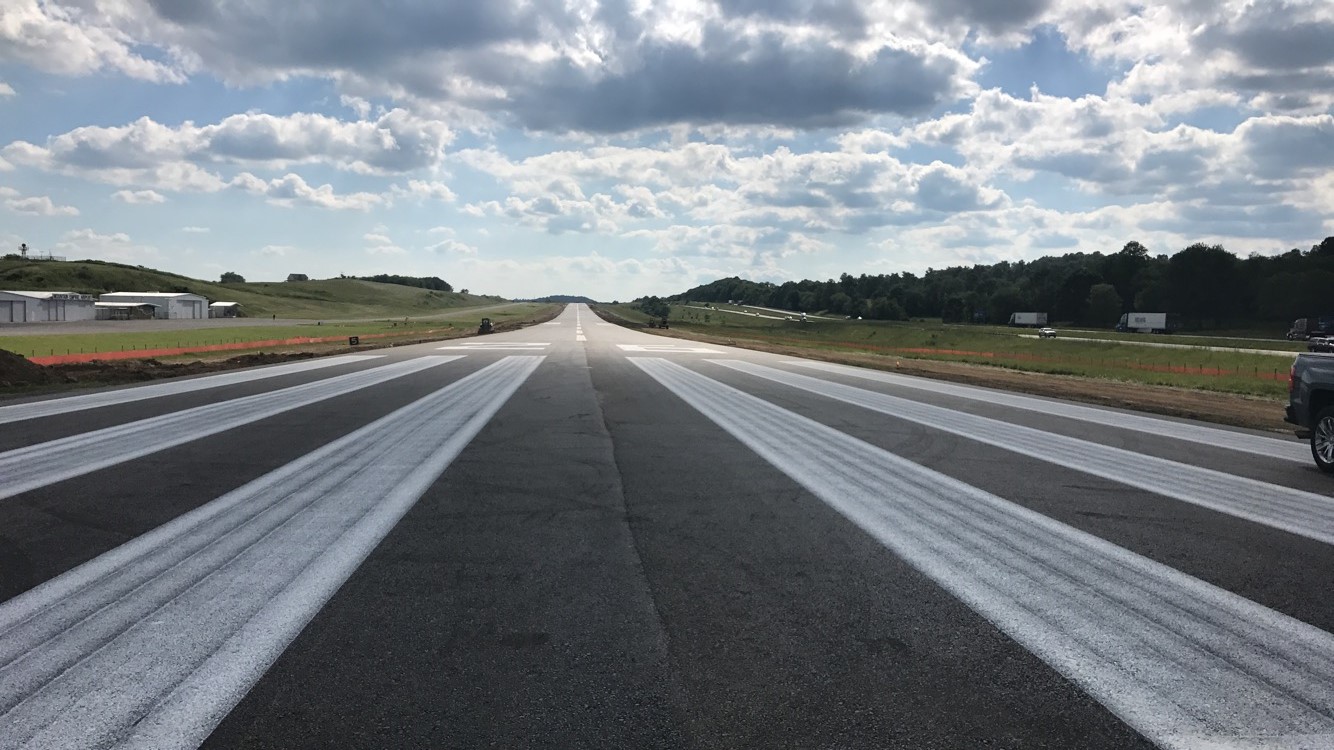
As Runway 8-26 at Mountain Empire Airport was last overlaid in 1992, an overlay had been included in the Airport’s Capital Improvement Program (CIP) for 2022. While the Airport had been completing preventative maintenance such as crack sealing, the noted age-related distresses of block cracking, raveling, and stripping were becoming more prevalent and extensive in the 5,252-foot runway. Additionally, the runway’s Pavement Condition Index (PCI), which was currently in the Fair/Good category, was forecasted to be in the range of 30-48 (Poor/Fair) by 2018.
Given the increased cracking and forecasted PCI, there was concern the pavement would not maintain in a useable condition until the planned rehabilitation in 2022, at which time the pavement would be 30 years old. Since the pavement would be nearing the point where full reconstruction would be required in lieu of a typical pavement overlay, it was recommended to advance the pavement rehabilitation in the Airport’s CIP. To aid in the priority ranking of the project, the non-critical runway lighting element of the original CIP request was deferred.
As the first step in the project, non-primary entitlement funds were utilized to complete a schematic design phase. In addition to completing the required surveys and geotechnical investigation for the final design, the schematic design would serve to identify the outstanding issues and propose options for the rehabilitation.
After review of multiple options, including a nominal overlay and a variable depth grade correcting overlay, and consideration of all factors, the variable depth overlay was selected for the final design. The final design included the placement of 13,000 tons of P-401 bituminous surface course to correct the non-standard longitudinal and transverse grades. To help alleviate reflective cracking, 44,000 square yards of asphalt overlay fabric was installed prior to placement of the overlay. As runway 8-26 is used by jet aircraft, the grooving of the pavement was also proposed. The project was also designed with a lesser alternate for the most critical portion of the rehabilitation in the event funding was not available for the full project.
Ultimately funding was secured for the project and the full alternate was awarded. The construction was completed in July 2017 and was completed within the construction budget.
Runway 5-23 Rehabilitation
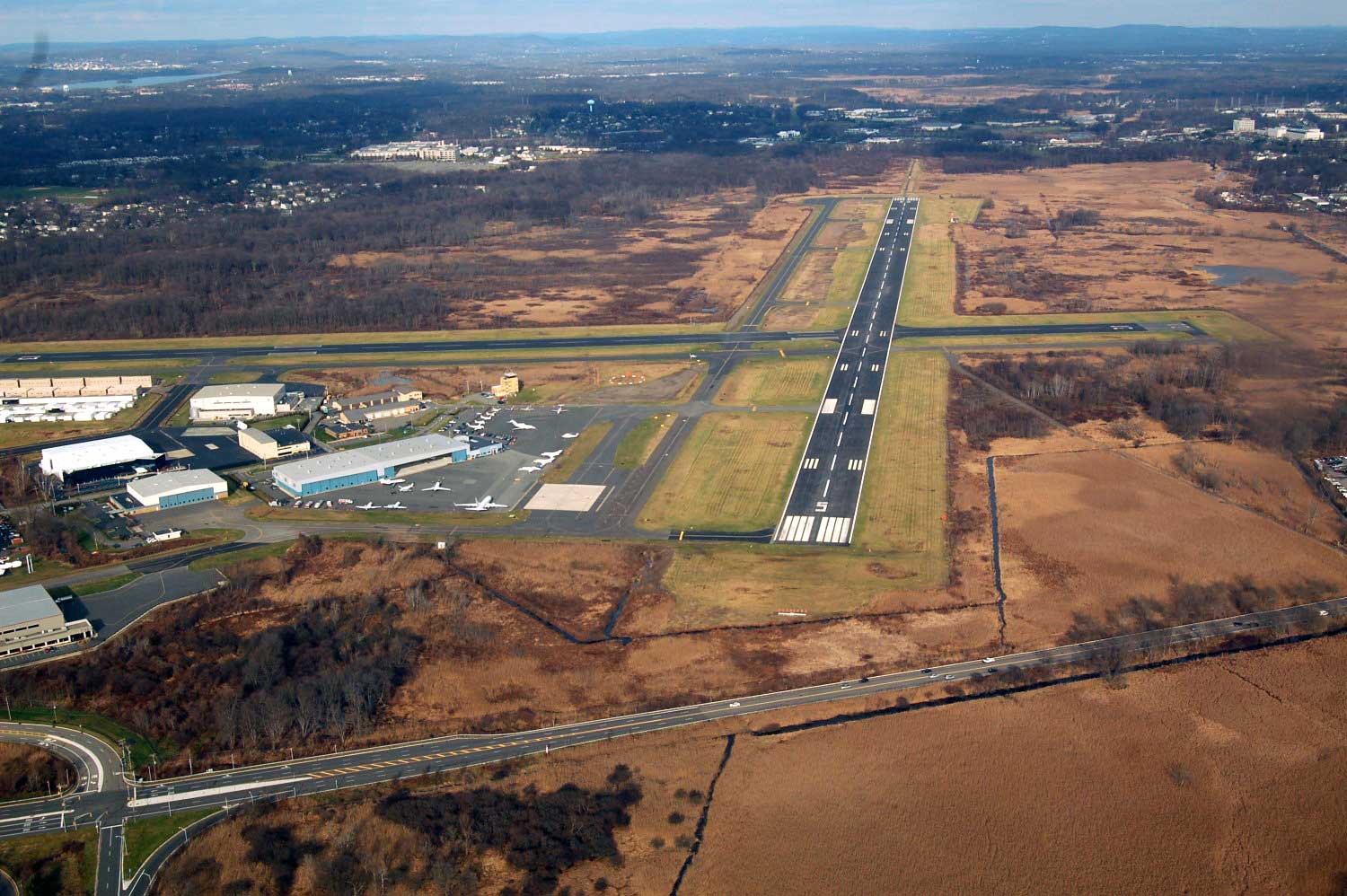
Delta is underway with the design, bidding, and construction of this five phase Runway 5-23 Rehabilitation project at Morristown Municipal Airport, one of New York City’s reliever airports. The Airport is located just 27 miles from the Holland Tunnel, and serves significant and meaningful national and international business traffic. The need for minimizing operational impacts at this field cannot be understated.
Delta completed the preliminary engineering portion of the environmental assessment for this $65 million development program. A FONSI was received in April, 2015. Project elements include full width strengthening overlay and keel rehabilitation (nine inch deep mill of the runway center), installation of an asphalt overlay fabric, nine inches of P-401 SP asphalt, rehabilitation of the lateral safety areas to standards, reconstruction of the connector taxiways, realignment of taxiways to meet FAA standards, reconstruction of the Runway 23 MALSR system, rehabilitation of the airfield lighting system, installation of PAPIs for Runways 5 and 23, and regrading of the glide slope stabilization area.
The runway rehabilitation program was initially funded with 100% local funds, which speaks to the importance and extent of the Airport’s service to the New York City area. The phasing and sequencing of this major development program is critical to keeping the Airport open and operational. It is anticipated that the entire program will take 7-10 years.
Rehabilitate Runway 17-35

This project included a pavement rehabilitation for the full length of Runway 17-35 at Ada Regional Airport, including crack repairs and a slurry seal coat to extend the useful life of the pavement. To maximize budget flexibility, the project was designed and bid as four separate alternates. Each alternate provided a different seal coat product ranging from a more traditional seal coat to a micro-surfacing treatment. The project also included re-marking the runway with a new designation as discovered during the design process.
Construct South Apron
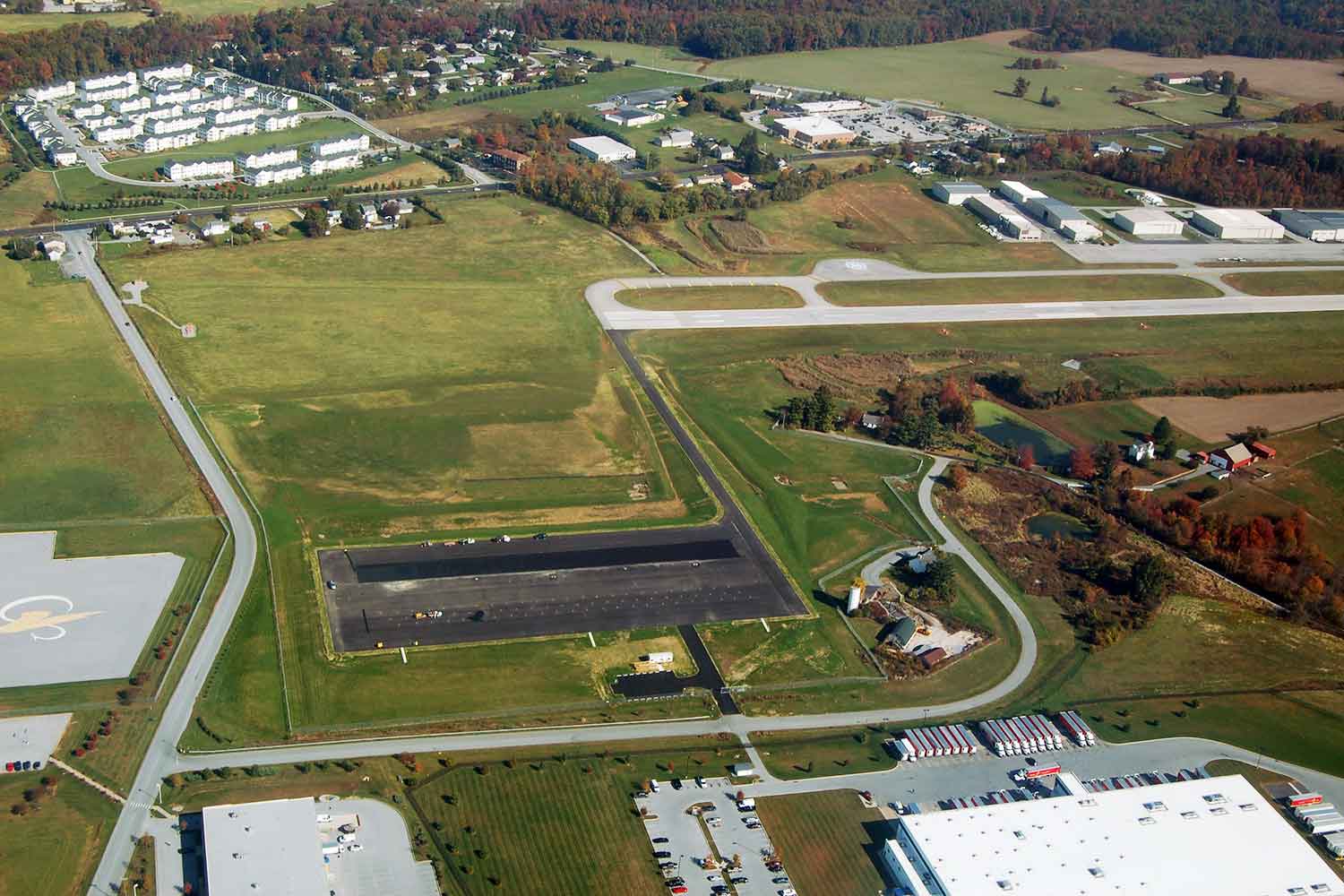
Delta provided design through construction phase services for this 8,000-square yard aircraft parking apron at Chester County/G. O. Carlson Airport to relocate based tied down aircraft out of taxiway safety areas and the runway primary surface. The location for this new apron was on the south side of the runway in an area which was previously undeveloped for airport use. This required a large environmental effort to mitigate the site, as well as an extensive planning and approval process for the development as the work limits spanned two Townships, each of which had its own requirements for the project. Delta also completed an airport-wide Land Development Plan which included the ultimate development of the site beyond the apron, and included up to 30 new corporate hangars on and adjacent to the proposed apron.
On-Call Planning Services

Delta is preparing a Master Plan for the Prescott Municipal Airport, including updated operations forecasting, determining facility requirements based on forecasted demand, development alternatives and evaluation, a financial feasibility analysis, and the preparation of an Airport Layout Plan (ALP) drawing set. A land use compatibility evaluation will be conducted, including coordinating with the City of Prescott and Yavapai County, to obtain shapefiles for current zoning and land use and to identify incompatible land uses. The financial feasibility analysis involves examining PRC’s financial resources, including its basic business model, operating revenues and expenses, and sources and uses of capital funds.
Additionally, a Runway Incursion Mitigation (RIM) analysis is to be conducted to identify risk factors and to develop strategies to mitigate these risks. This master planning effort also includes an aerial survey and obstruction analysis and the upload of the data to the FAA Airports GIS database. Forecasts are to be completed for air carrier enplanements, aircraft operations (general aviation, commercial service, military, and air cargo), and for based and transient aircraft. Air carrier enplanements will be forecasted according to several different “what if” scenarios. To further understand the current air service market and to develop realistic estimates of long-term future airline passenger demand, an in-depth air service market evaluation will be conducted. The Master Plan is being coordinated closely with FAA and the Arizona Department of Transportation (ADOT).
Runway 5-23 Rehabilitation

Delta designed and provided construction administration services for the rehabilitation of Runway 5-23 at Mansfield Lahm Regional Airport. During the project, a heavily traveled and highly deteriorated portion of Taxiway D, which is a critical taxiway to maintain normal airport operations, was also rehabilitated. The aged Runway 5-23 distance remaining signs were replaced and the Airport Hot Spot (Taxiway C) was removed.
Detailed phasing and a short construction time period ensured minimal impact to aircraft operations and a significant overall cost savings. Coordination between airport operations, the air traffic control tower, and airport stakeholders was an integral part of the design and construction process. This project was completed under budget and ahead of schedule.
Runway 6 Extension Program

During our long-term relationship with the Virginia Highlands Airport Authority, we have helped the Airport grow from a small general aviation airport with a few dozen airplanes, to a large facility with over 50 airplanes including corporate jets. In 2008, the Authority approached Delta for assistance with extending their runway to accommodate the growing corporate jet demand.
Delta has managed all phases of the runway extension project from the existing length of 4,471 feet to a future length of 5,500 feet. The initial steps included developing the justification to get FAA and Virginia Department of Aviation buy-in on the project’s purpose and need. Delta then completed the airport planning and environmental assessment necessary as first steps in all airport projects.
In order to move this project from a plan to a reality, Delta assisted the Authority with developing a creative funding program that combined funds from multiple sources to maximize governmental grants while reducing the local cost burden.
Delta’s knowledge of the various funding programs and ability to put together the applications and presentations for the funding agencies helped the Authority secure the funding commitments necessary to undertake the multi-million dollar runway extension project.
Delta has completed the planning, environmental, land acquisition, and engineering design projects for the runway extension, with the construction phases now underway. The project is phased to maximize federal and state grants, and minimize costs to the Authority. Completion of the runway extension is planned in the next few years.
Runway 9-27 Rehabilitation

Runway 9-27 at Los Alamos Airport was rehabilitated in order to provide a new wearing surface course. The existing pavement surface had served its useful life and was exhibiting moderate to severe cracking. A Pavement Condition Index (PCI) study/report was completed by the New Mexico Department of Transportation’s Aviation Division in July of 2007. The study resulted in the runway pavement condition being reported as very poor and in borderline serious condition. Rehabilitating the runway pavement in its current condition was done to preclude total pavement reconstruction in the near future.
In order to achieve a total runway length of 6,000 feet, the design of the project also included a 450 foot runway extension to Runway 27. A Runway Length Study was completed in January, 2007. Although the study indicated a runway length of 6,100 feet as the recommendation for accommodating 75% of small airplanes with less than 10 passenger seats, a shorter extension (to 6,000 feet) was evaluated and determined to be more economically feasible than extending the runway to 6,100 feet. The amount of grading and earthwork required to accommodate a 6,100 foot runway proved to be cost prohibitive.
The existing runway edge lights are Medium Intensity Runway Lights (MIRLs) and are located approximately 10 feet off of the runway pavement. The existing runway edge lights remained and new runway edge lights were installed for the runway extension portion of the project. This project also included the relocation of Runway End Identifier Lights at the end of Runway 27 as well as the installation of new distance remaining signs for Runway 9-27. Three bid alternates were designed in order to provide funding flexibility for construction. Excellent bids were received, allowing the entire project (rehabilitation plus runway extension) to be awarded. Construction was completed in July, 2011.
Strategic, Business, & Marketing Plans

Delta prepared three tools to support and advance the Winchester Regional Airport Authority’s vision for the Airport, which included a Strategic Plan, a Business Plan, and a Marketing Plan.
- The Strategic Plan collaboratively develops an airport mission and vision statement. The plan enables the Authority to implement strategies and action plans to bolster current organizational strengths, address structural weaknesses, and leverage opportunities for future growth and success.
- The Business Plan examines the historical/current airport revenues and expenditures, forecasts future financial outcomes, and benchmarks the Airport against peer facilities related to key business metrics. Through this effort, Delta provided recommendations associated with enhancing airport performance and cost controls.
- The Marketing Plan was developed as a tool to help the Authority promote and advertise its general aviation services to key markets and stakeholders.